
學術語彙:AWL、搭配詞與精準用字的三層功夫
為什麼文法全對的英文,讀起來還是不像論文?關鍵藏在學術詞表、固定搭配與主張強度的分寸感裡。
為什麼你的英文「文法全對」,老師卻說讀起來不像學術論文?
想像這樣的場景:你花了一個下午把研究方法那一段寫完,每個句子的時態、主謂一致、冠詞都檢查過了,文法軟體一個紅線都沒挑出來。可是指導教授看完,眉頭一皺,在旁邊批了一句:「meaning is fine, but this doesn't read like academic writing.」
問題出在哪裡?多半不是文法,而是用字。學術英文有一套自己的詞彙生態系——它偏好某些字、迴避某些字、要求特定的字必須跟特定的字一起出現。掌握文法只是讓句子「不會錯」,掌握學術語彙才能讓句子「像樣」。這篇文章要談的,正是學術寫作裡最容易被忽略、卻最能拉開差距的三件事:學術詞表(Academic Word List, AWL)、搭配詞(collocation),以及精準用字(precision)。
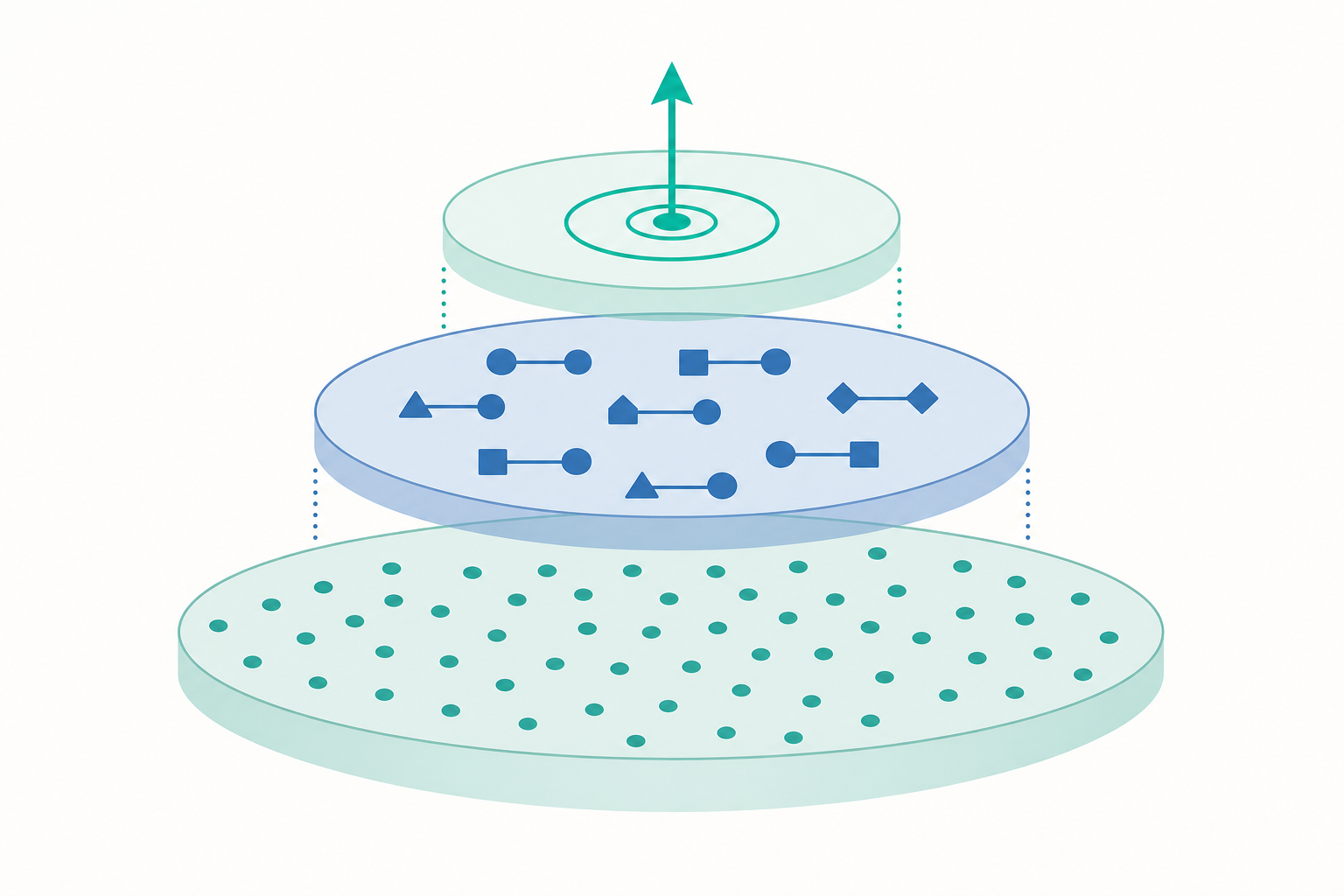
第一層:學術詞表(AWL)——學術英文的「公用詞彙」
你大概聽過「日常英文」和「學術英文」的差別,但這個差別其實是可以被量化、被清單化的。
紐西蘭學者 Averil Coxhead 在 2000 年分析了 350 萬字的學術文本,整理出一份 Academic Word List(AWL),收錄 570 個「詞族(word family)」。這些字的特色是:它們不屬於最高頻的 2000 個日常英文字(例如 the, make, good),但廣泛出現在各學科的學術寫作中——不論你讀的是物理、法律還是社會學的論文,都會碰到它們。
舉幾個 AWL 裡的代表字:analyse, approach, concept, consist, derive, establish, factor, indicate, method, occur, significant, structure, variable。
這些字不華麗、不艱深,但它們是學術論述的「承重牆」。一個初學者和一個成熟作者的差距,往往不在於誰會用更冷僻的字,而在於誰能自然地、密集地、正確地使用這批公用學術詞彙。
看一個例子:日常字 vs AWL 字
同一個意思,用日常字和用 AWL 字寫出來,質感差很多:
❌ 不佳:The results show that the new way of teaching helps students do better.
✅ 改良:The results indicate that the new approach to teaching enhances student performance.
中文說明:兩句意思相同,但改良版把口語的 show、way、helps、do better 換成了 indicate、approach、enhances、performance。讀起來立刻從「課堂閒聊」變成「研究報告」。注意這不是堆砌難字——indicate 和 approach 都是極常見的學術字,只是它們屬於學術語域(register)。
再看一段:
❌ 不佳:We looked at the data and found some things that were the same in all the groups.
✅ 改良:We analysed the data and identified several common factors across all groups.
中文說明:looked at → analysed、found → identified、things → factors、the same → common。每一個替換都把模糊的日常動詞換成精準的學術動詞。
一個重要提醒:AWL 不是叫你「逢字必換」。學術寫作要的是得體(appropriateness),不是炫技。把 use 一律改成 utilise 反而會顯得做作(後面精準用字一節會詳談)。AWL 的正確用法是:當你發現自己反覆使用 show, thing, get, big, a lot of 這類「萬用日常字」時,停下來想想——這裡有沒有一個更精準的學術字?
第二層:搭配詞(Collocation)——學術英文的「隱形文法」
如果說 AWL 解決的是「用哪個字」,那搭配詞解決的就是「這個字旁邊該放哪些字」。
搭配詞指的是語言中某些字「習慣性地」一起出現的現象。英文母語者會說 make a decision,不會說 do a decision;會說 strong evidence,不會說 powerful evidence;會說 conduct research,不會說 make research。這些組合沒有文法規則可循,純粹是約定俗成——但用錯了,句子讀起來就「卡卡的」,立刻洩漏你不是內行人。
學術英文有大量高度固定的搭配。掌握它們,是讓你的寫作「聽起來地道」的關鍵。以下分幾類示範。
動詞 + 名詞的學術搭配
這是中文母語者最常出錯的地方,因為我們會不自覺地「直譯」中文的動詞。
| ❌ 中式直譯 | ✅ 地道搭配 | 中文 |
|---|---|---|
| do an experiment | conduct an experiment | 進行實驗 |
| do research | conduct research | 進行研究 |
| make an analysis | conduct / carry out an analysis | 進行分析 |
| get a conclusion | draw / reach a conclusion | 得出結論 |
| make a question | raise / pose a question | 提出問題 |
| play an important role | play a crucial role(√ 這個對) | 扮演重要角色 |
| do a survey | conduct a survey | 進行調查 |
| solve a problem | address / tackle a problem | 處理問題 |
注意 play a role 是少數中英搭配一致的例子,但即使如此,學術寫作更愛用 crucial / pivotal / significant role 而非 important role。
形容詞 + 名詞的學術搭配
| ❌ 較弱 | ✅ 學術慣用 | 中文 |
|---|---|---|
| big difference | significant / substantial difference | 顯著差異 |
| many evidence | strong / compelling / ample evidence | 強力證據 |
| deep research | rigorous / thorough research | 嚴謹研究 |
| close relationship | strong / positive correlation | 強相關 |
| true result | valid / robust result | 有效/穩健的結果 |
特別提醒:evidence 在學術英文裡是不可數名詞,所以是 much evidence / a body of evidence,不是 many evidences。這是中文母語者的超高頻錯誤。
副詞 + 形容詞、以及論述框架搭配
學術寫作也有一批「框架式」搭配,用來組織論證:
- be closely related to(與……密切相關)
- be directly proportional to(與……成正比)
- be largely consistent with(大致與……一致)
- provide insight into(提供對……的洞見)
- shed light on(闡明……)
- have a profound impact on(對……有深遠影響)
- the findings lend support to(研究發現支持……)
動手試試:修正搭配錯誤
試著把下面這段「文法全對但搭配全錯」的句子改地道。先自己想,再看答案。
原句:In this paper, we do a research to find the reason of the problem. We make many experiments and get a result that shows there is a big relationship between the two factors. This gives a powerful evidence to our idea.
問題診斷:do a research(不可數,且動詞錯)、find the reason(搭配弱)、make experiments(動詞錯)、get a result(動詞錯)、big relationship(形容詞錯)、powerful evidence(形容詞錯且不可數)。
改良版:In this paper, we conduct research to identify the cause of the problem. We carry out several experiments and obtain results that reveal a strong relationship between the two factors. This provides compelling evidence for our hypothesis.
中文說明:每一處都換成學術界約定俗成的組合。整段讀起來瞬間「升級」,而文法層面其實沒動多少——關鍵全在搭配。
怎麼累積搭配詞? 最有效的方法不是背單字,而是讀你領域的論文時,留意動詞與名詞的固定組合,整句整句地抄錄。也可以善用線上語料庫工具(如 COCA 語料庫、Linggle、Netspeak),輸入「______ research」就能看到母語者最常用哪些動詞搭配 research。
第三層:精準用字(Precision)——學術英文的「分寸感」
掌握了 AWL 和搭配詞之後,最後一層、也是最難的一層,是精準。學術寫作的本質是準確地報告你知道什麼、不知道什麼、有多確定。用字稍有偏差,意思就跑掉,甚至誇大了你的研究主張,這在審稿人眼裡是大忌。
迷思一:「華麗字 = 學術」
很多學生以為把簡單字換成長字就「高級」了。其實過度書面化(over-formalising)是新手最明顯的破綻。
❌ 過度做作:We utilised a methodology to ascertain the aforementioned phenomenon's underlying causality.
✅ 清楚有力:We used a method to determine the cause of this phenomenon.
中文說明:utilise 在絕大多數情況下就等於 use(除非強調「為某用途善用某資源」),ascertain、aforementioned 這類字塞太多只會讓句子臃腫。好的學術英文追求的是 clarity(清晰),不是 complexity(複雜)。能用 use 就別用 utilise。
迷思二:忽略「主張強度」的精準
這是研究所層級最看重的精準。同樣是描述研究發現,你用的動詞決定了你「宣稱」了多強的因果或關聯——而審稿人會逐字檢查你有沒有過度宣稱(overclaiming)。
| 強度 | 動詞 | 適用情境 |
|---|---|---|
| 最強(因果) | cause, lead to, result in | 有實驗證據支持因果 |
| 中等(影響) | affect, influence, contribute to | 有關聯且方向合理 |
| 較弱(關聯) | be associated with, be linked to, correlate with | 只觀察到相關,無法斷因果 |
| 推測 | may suggest, might indicate, could imply | 初步、暫時性的詮釋 |
看這組對照:
❌ 過度宣稱:Our survey proves that social media causes anxiety in students.
✅ 精準:Our survey suggests that social media use is associated with higher levels of anxiety in students.
中文說明:一份問卷調查(相關性研究)不可能 prove(證明),也不能主張 cause(造成)。改用 suggests 和 is associated with,才符合研究設計真正能支持的主張強度。把 prove 留給數學,把 cause 留給有對照組的實驗。
迷思三:避諱(hedging)不夠或過頭
學術英文用一套「緩和語(hedging)」來標示不確定性:may, might, appear to, seem to, tend to, generally, in most cases, to some extent。這不是「沒自信」,而是學術誠實(academic honesty)——你只主張資料能支持的範圍。
❌ 太武斷:This method is the best way to teach writing.
✅ 得體:This method appears to be an effective approach to teaching writing, at least in the contexts examined here.
但 hedging 也不能過頭,否則句子變得空洞無力:
❌ 過度避諱:It might possibly be the case that this could perhaps suggest a potential tendency.
✅ 適度:This tends to suggest a potential effect.
中文說明:一句裡塞 might, possibly, could, perhaps, potential 五個緩和詞,讀者根本抓不到你到底主張了什麼。精準的 hedging 是「剛好標示出不確定性」,不多不少。
看一個例子:把一段話「三層」一起升級
把前面三層整合,看一段研究結論從初稿到定稿的完整蛻變:
初稿:We did a study to see if the new app makes students learn better. We found big improvements. This proves the app is very good and everyone should use it.
定稿:We conducted a study to examine whether the new application enhances student learning. The results revealed substantial improvements in performance. These findings suggest that the application may be an effective tool for supporting learning, although further research is needed to confirm its generalisability.
中文說明:第一句修了搭配(did a study → conducted a study);第二句用了 AWL 字(enhances, revealed, substantial);第三句修了主張強度(proves → suggest、very good → may be effective)並加上得體的 hedging(although further research is needed)。三層缺一不可。
重點回顧
- AWL 是學術英文的公用詞彙:570 個跨學科高頻學術字(如 analyse, indicate, approach, significant),不華麗但是論述的承重牆。當你反覆用 show, thing, get, a lot of 時,就該想想有沒有更精準的學術字。
- 搭配詞是隱形文法:學術英文偏好固定組合——conduct research、draw a conclusion、strong evidence、significant difference。中文母語者最常見的錯誤就是「直譯動詞」(do research)和「不可數名詞用複數」(evidences)。
- 精準是最高層、也最看重分寸:別用華麗字充場面(use 勝過 utilise);務必匹配主張強度(相關性研究只能 be associated with,不能 cause 或 prove)。
- 適度 hedging 是學術誠實:用 may, suggest, appear to 標示不確定性,但別過頭到讓句子空洞。
- 累積方法是「整句抄錄+語料庫查證」:讀論文時整組抄下動名搭配,用 COCA、Linggle 等工具驗證母語者的慣用組合。
深入探討(研究所視角)
到了研究所階段,學術語彙不再只是「寫得地道」的問題,而牽涉到語言學、語料庫研究與學術社群認同的深層機制,值得從幾個方向延伸思考。
一、從「詞」到「詞束」:搭配的心理現實與 lexical priming。 語料庫語言學者 Michael Hoey 提出的 lexical priming(詞彙促發)理論主張,我們對每個字的心理表徵都「綁定」了它慣常出現的搭配、語法環境與語域。換言之,母語者腦中的 research 不是孤立的字,而是預先連結了 conduct、rigorous、findings 等夥伴。這解釋了為什麼搭配錯誤如此刺耳——它違反了讀者被「促發」的預期。更進一步,學術寫作的真正單位往往不是單字,而是 lexical bundles(詞束):Douglas Biber 等人透過語料庫分析發現,學術文本高度仰賴 on the other hand、as a result of、it is important to note that、the extent to which 這類三到四字的高頻固定串。成熟作者的流暢,很大程度來自對這些詞束的自動化掌握,而非逐字組裝。
二、AWL 的更新與學科特異性:從通用到專門。 Coxhead 的 AWL(2000)雖是經典,但已有重要修正。Gardner 與 Davies(2014)以更大語料建立的 Academic Vocabulary List(AVL) 改採「跨學科分布 + 詞頻」的統計指標,並指出 AWL 的某些詞族在不同學科其實分布不均。這帶出一個關鍵洞見:通用學術詞彙之外,每個學科還有自己的「半技術詞彙(semi-technical vocabulary)」——同一個字在不同領域意義不同(如 significant 在統計學是「達顯著水準」,在日常是「重要」;power 在統計是「檢定力」,在物理是「功率」)。研究生的詞彙進階,本質上是從通用 AWL 走向學科話語社群(discourse community)的專門詞彙,這正是 John Swales 的 genre analysis(體裁分析) 與 ESP(English for Specific Purposes)研究的核心。
三、用字精準與「認識立場(epistemic stance)」。 前文談的主張強度與 hedging,在學術語言學裡屬於 stance and metadiscourse(立場與後設論述) 的研究範疇。Ken Hyland 的系列研究顯示,hedges(緩和語) 與 boosters(強調語,如 clearly, undoubtedly, demonstrate) 的配置,是作者建構可信度與協商學術主張的核心修辭手段,而且具有顯著的學科與文化差異:軟科學(人文社會)的 hedging 密度通常高於硬科學;英語母語作者與某些語言背景作者的 stance 表達也有系統性差異。對台灣的研究生而言,這意味著「精準用字」不只是語言能力,更是進入特定學術社群、學會「像這個領域的人那樣說話」的社會化過程。
四、跨領域連結與 AI 時代的新課題。 學術語彙研究與自然語言處理(NLP)正深度交會:詞嵌入(word embeddings)與大型語言模型本質上就是「搭配機率」的大規模統計學習,這也是為什麼像 Uedu 平台的 Linguomics(語言表達維度) 能對學習者的語言複雜度與搭配地道性進行自動分析。同時,生成式 AI 帶來新的張力——當 AI 能輕易產出「搭配正確、AWL 密集」的文字時,精準用字背後的『主張要對得起證據』這件事反而更難、更重要。AI 可以幫你修飾 prove 成 suggest,但只有你自己知道你的資料到底支持哪一種主張。換句話說,學術語彙的最高境界——讓語言的強度精確匹配你對知識的把握程度——恰恰是 AI 無法代勞、必須由研究者自身承擔的學術責任。這也呼應了學術寫作的根本精神:文字的精準,是思想精準的外顯。