Home
學生控制台
註冊會員/登入
研究知情同意書
UeduGPTs
Aida 優學伴
Uedu Open
支援與訊息

UeduGPTs

--

Jupyters

3

AI 回覆桌面通知

AI 助教回覆完成時顯示桌面通知

聊天訊息通知

同學在討論區發送訊息時通知

聲音通知

每當有新通知時播放提示音

Uedu Open / Introduction to Probability
RES.6-012

Introduction to Probability

Prof. John Tsitsiklis, Prof. Patrick Jaillet | Spring 2018
Science & Math Mathematics Engineering Systems Engineering Probability and Statistics
前往原始課程
CC BY-NC-SA 4.0
課程簡介

The tools of probability theory, and of the related field of statistical inference, are the keys for being able to analyze and make sense of data. These tools underlie important advances in many fields, from the basic sciences to engineering and management.

This resource is a companion site to 6.041SC Probabilistic Systems Analysis and Applied Probability. It covers the same content, using videos developed for an edX version of the course.

課程資訊
來源MIT 開放式課程
科系Electrical Engineering and Computer Science
語言English
影片數266
課程影片 (266)
1
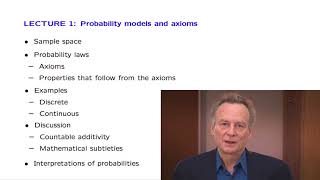
L01.1 Lecture Overview
2
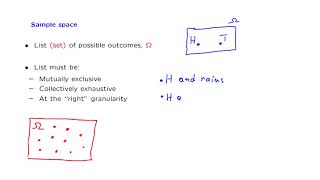
L01.2 Sample Space
L01.2 Sample Space
3
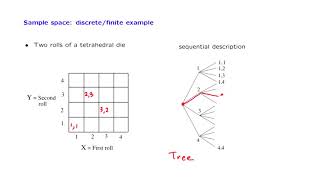
L01.3 Sample Space Examples
4
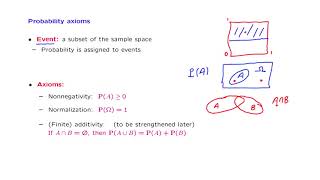
L01.4 Probability Axioms
5
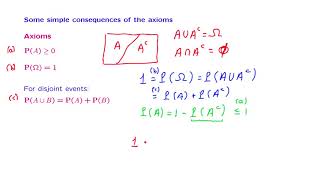
L01.5 Simple Properties of Probabilities
6
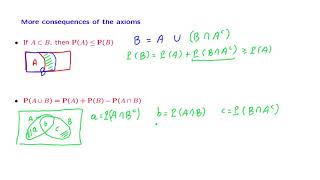
L01.6 More Properties of Probabilities
7
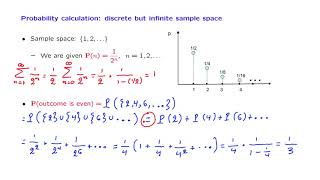
L01.7 A Discrete Example
8
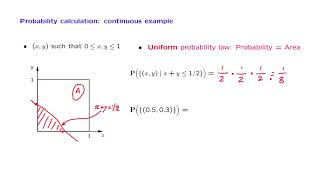
L01.8 A Continuous Example
9
L01.9 Countable Additivity
10
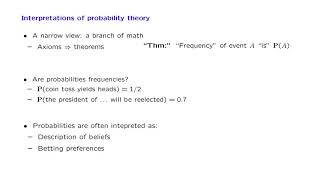
L01.10 Interpretations & Uses of Probabilities
11
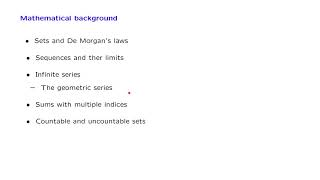
S01.0 Mathematical Background Overview
12
S01.1 Sets
S01.1 Sets
13
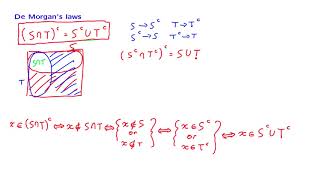
S01.2 De Morgan's Laws
14
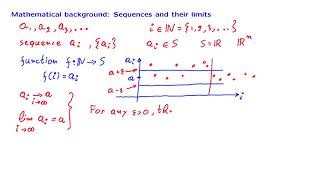
S01.3 Sequences and their Limits
15
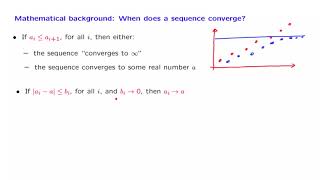
S01.4 When Does a Sequence Converge
16
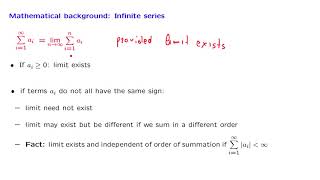
S01.5 Infinite Series
17
S01.6 The Geometric Series
18
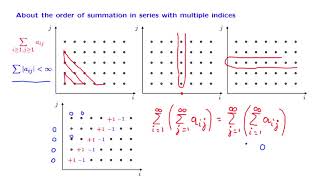
S01.7 About the Order of Summation in Series with Multiple Indices
19
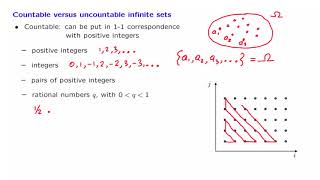
S01.8 Countable and Uncountable Sets
20
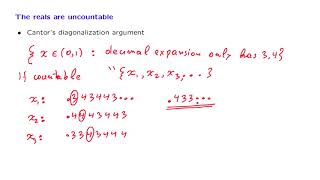
S01.9 Proof That a Set of Real Numbers is Uncountable
21
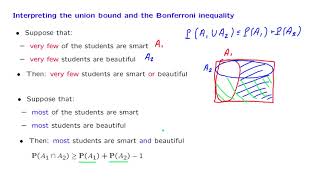
S01.10 Bonferroni's Inequality
22
L02.1 Lecture Overview
23
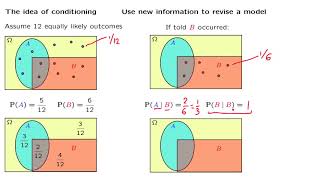
L02.2 Conditional Probabilities
24
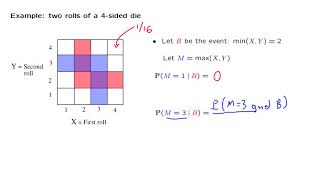
L02.3 A Die Roll Example
25
L02.4 Conditional Probabilities Obey the Same Axioms
26
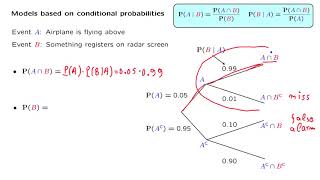
L02.5 A Radar Example and Three Basic Tools
27
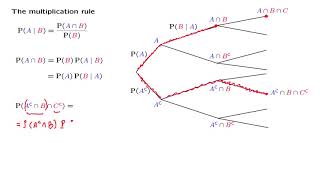
L02.6 The Multiplication Rule
28
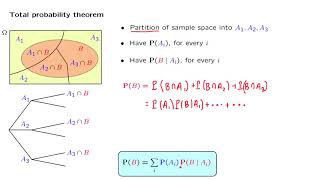
L02.7 Total Probability Theorem
29
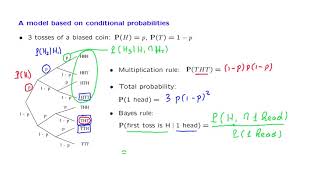
L02.8 Bayes' Rule
L02.8 Bayes' Rule
30
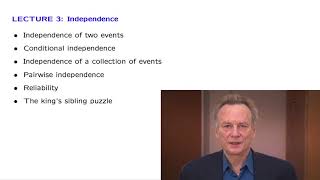
L03.1 Lecture Overview
31
L03.2 A Coin Tossing Example
32
L03.3 Independence of Two Events
33
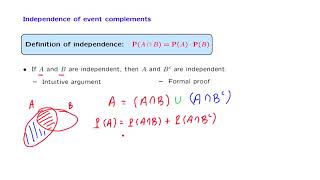
L03.4 Independence of Event Complements
34
L03.5 Conditional Independence
35
L03.6 Independence Versus Conditional Independence
36
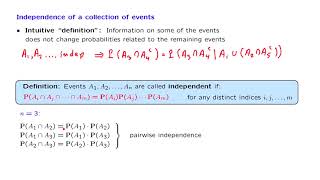
L03.7 Independence of a Collection of Events
37
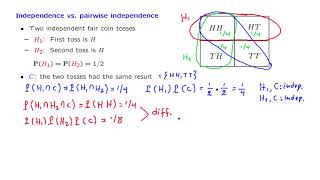
L03.8 Independence Versus Pairwise Independence
38
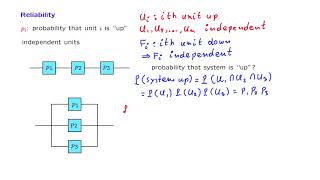
L03.9 Reliability
L03.9 Reliability
39
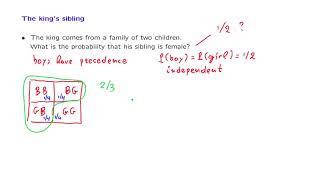
L03.10 The King's Sibling
40
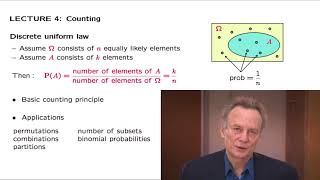
L04.1 Lecture Overview
41
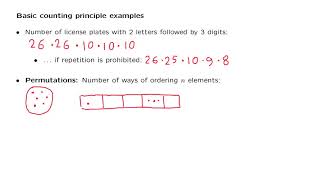
L04.2 The Counting Principle
42
L04.3 Die Roll Example
43
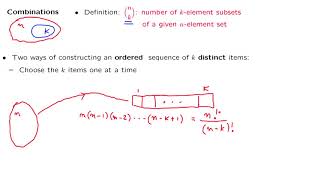
L04.4 Combinations
L04.4 Combinations
44
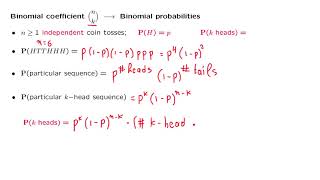
L04.5 Binomial Probabilities
45
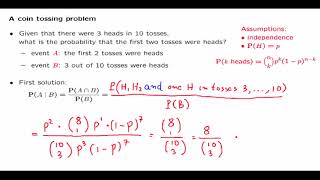
L04.6 A Coin Tossing Example
46
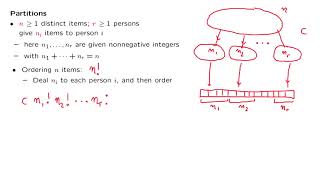
L04.7 Partitions
L04.7 Partitions
47
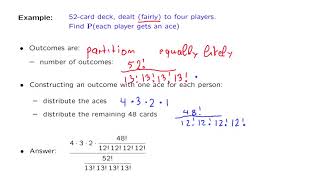
L04.8 Each Person Gets An Ace
48
L04.9 Multinomial Probabilities
49
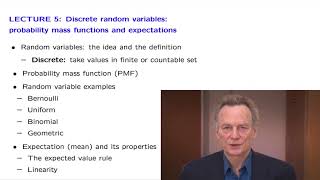
L05.1 Lecture Overview
50
L05.2 Definition of Random Variables
51
L05.3 Probability Mass Functions
52
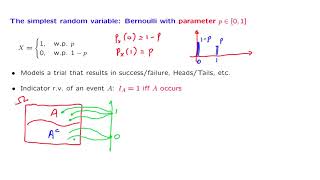
L05.4 Bernoulli & Indicator Random Variables
53
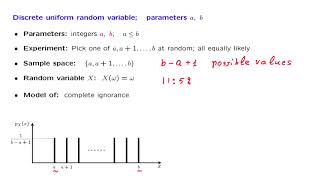
L05.5 Uniform Random Variables
54
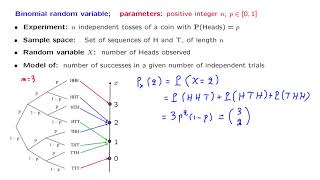
L05.6 Binomial Random Variables
55
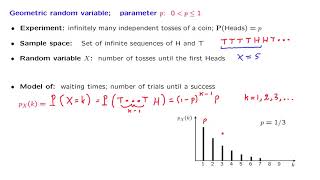
L05.7 Geometric Random Variables
56
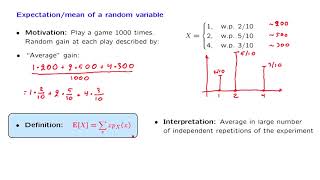
L05.8 Expectation
L05.8 Expectation
57
L05.9 Elementary Properties of Expectation
58
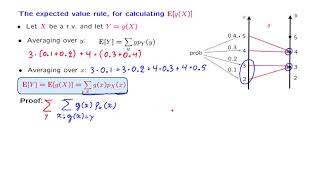
L05.10 The Expected Value Rule
59
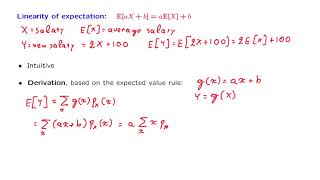
L05.11 Linearity of Expectations
60
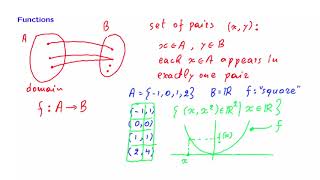
S05.1 Supplement: Functions
61
L06.1 Lecture Overview
62
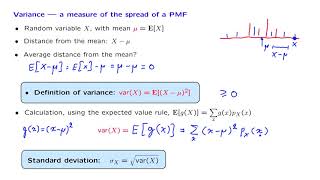
L06.2 Variance
L06.2 Variance
63
L06.3 The Variance of the Bernoulli & The Uniform
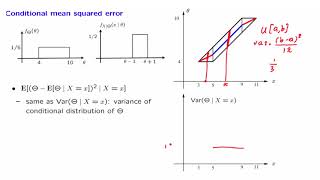
64
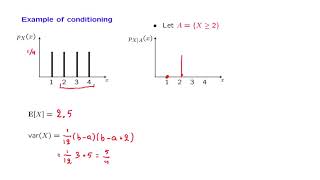
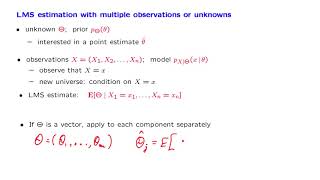
L06.4 Conditional PMFs & Expectations Given an Event
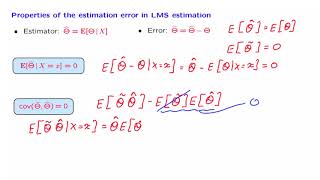
65
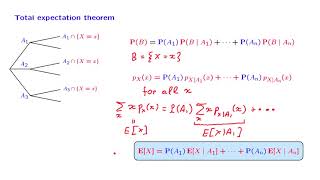
L06.5 Total Expectation Theorem
66
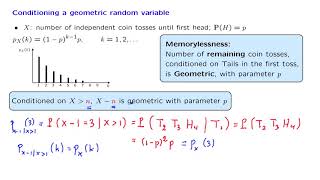
L06.6 Geometric PMF Memorylessness & Expectation
67
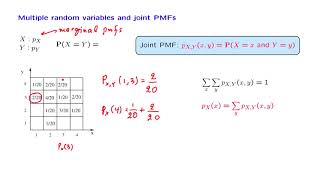
L06.7 Joint PMFs and the Expected Value Rule
68
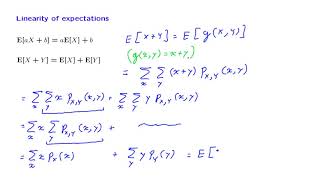
L06.8 Linearity of Expectations & The Mean of the Binomial
69
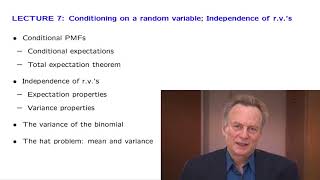
L07.1 Lecture Overview
70
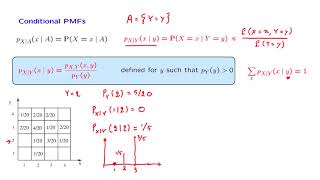
L07.2 Conditional PMFs
71
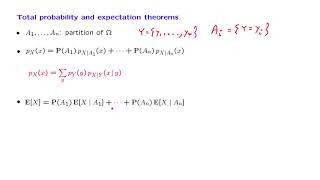
L07.3 Conditional Expectation & the Total Expectation Theorem
72
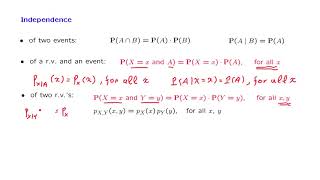
L07.4 Independence of Random Variables
73
L07.5 Example
L07.5 Example
74
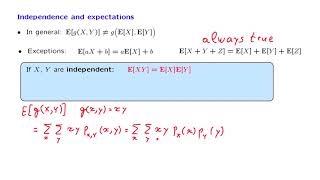
L07.6 Independence & Expectations
75
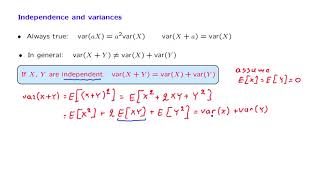
L07.7 Independence, Variances & the Binomial Variance
76
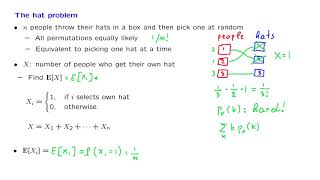
L07.8 The Hat Problem
77
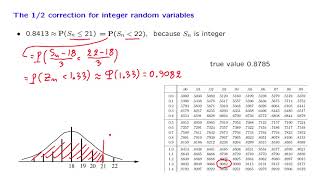
S07.1 The Inclusion-Exclusion Formula
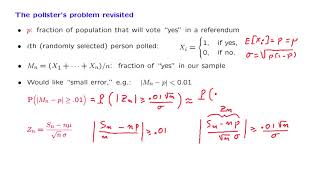
78
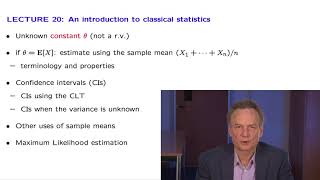
S07.2 The Variance of the Geometric
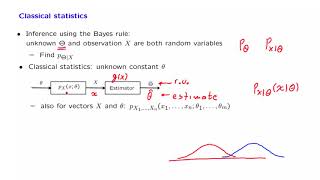
79
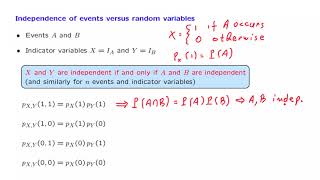
S07.3 Independence of Random Variables Versus Independence of Events
80
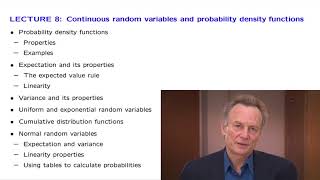
L08.1 Lecture Overview
81
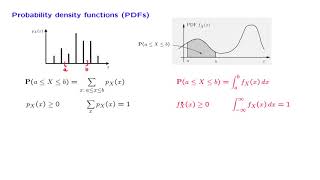
L08.2 Probability Density Functions
82
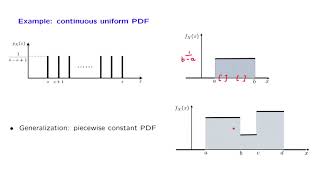
L08.3 Uniform & Piecewise Constant PDFs
83
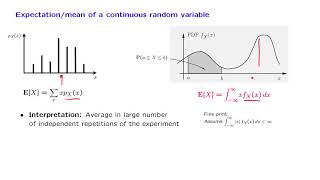
L08.4 Means & Variances
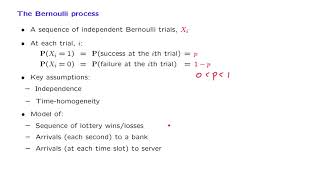
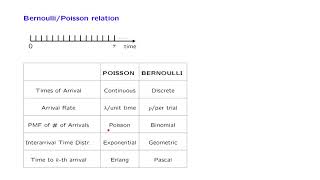
84
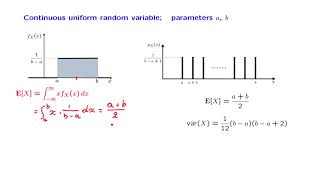
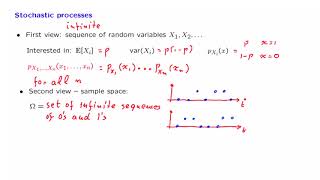
L08.5 Mean & Variance of the Uniform
85
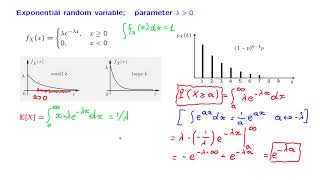
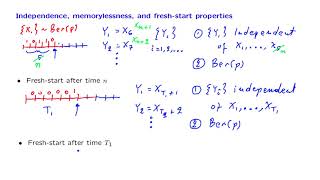
L08.6 Exponential Random Variables
86
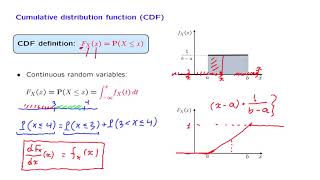
L08.7 Cumulative Distribution Functions
87
L08.8 Normal Random Variables
88
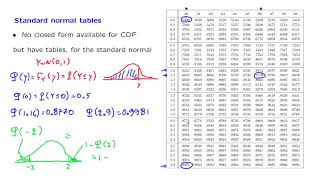
L08.9 Calculation of Normal Probabilities
89
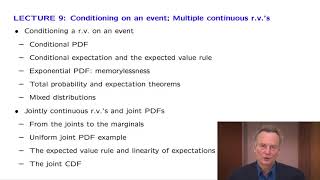
L09.1 Lecture Overview
90
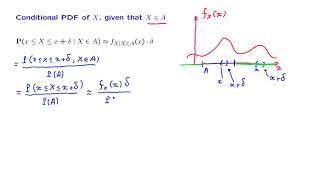
L09.2 Conditioning A Continuous Random Variable on an Event
91
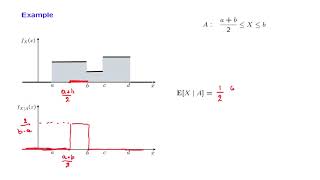
L09.3 Conditioning Example
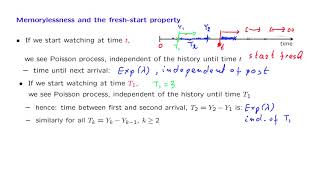
92
L09.4 Memorylessness of the Exponential PDF
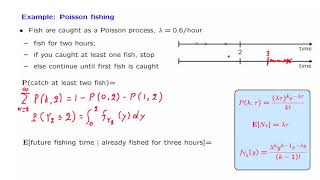
93
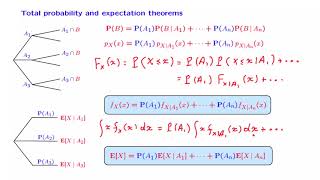
L09.5 Total Probability & Expectation Theorems
94
L09.6 Mixed Random Variables
95
L09.7 Joint PDFs
L09.7 Joint PDFs
96
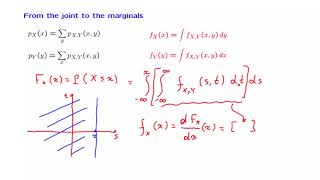
L09.8 From The Joint to the Marginal
97
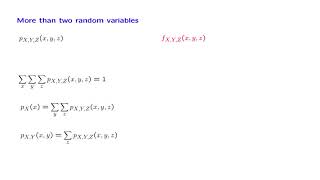
L09.9 Continuous Analogs of Various Properties
98
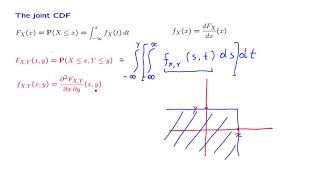
L09.10 Joint CDFs
L09.10 Joint CDFs
99
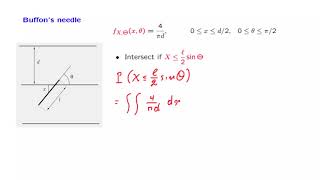
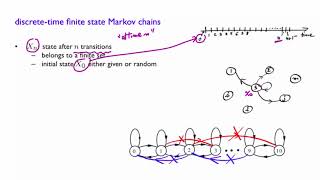
S09.1 Buffon's Needle & Monte Carlo Simulation
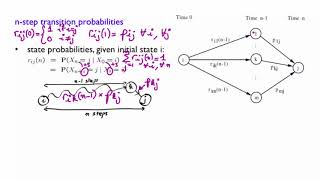
100
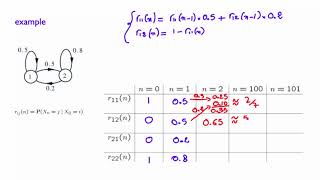
L10.1 Lecture Overview
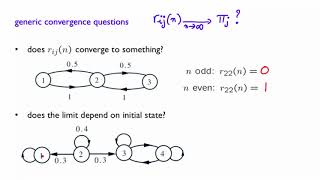
101
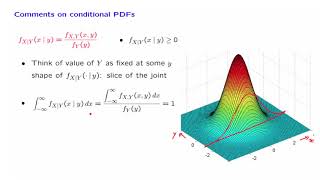
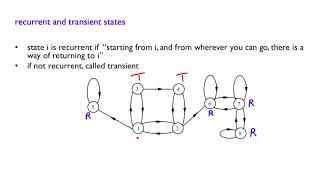
L10.2 Conditional PDFs
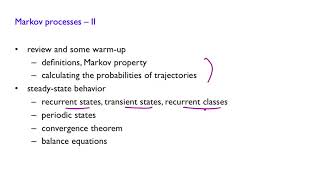
102
L10.3 Comments on Conditional PDFs
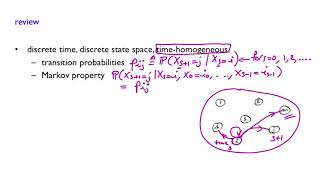
103
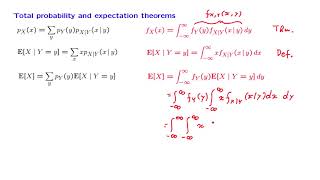
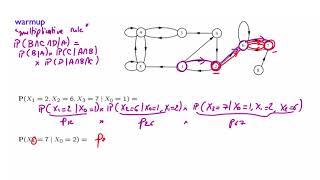
L10.4 Total Probability & Total Expectation Theorems
104
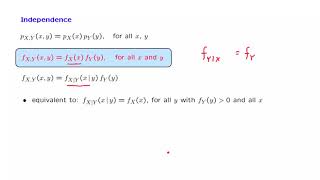
L10.5 Independence
L10.5 Independence
105
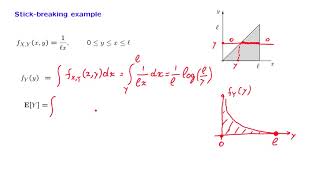
L10.6 Stick-Breaking Example
106
L10.7 Independent Normals
107
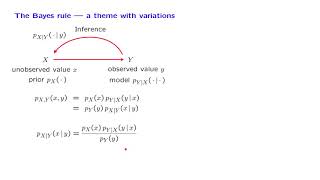
L10.8 Bayes Rule Variations
108
L10.9 Mixed Bayes Rule
109
L10.10 Detection of a Binary Signal
110
L10.11 Inference of the Bias of a Coin
111
L11.1 Lecture Overview
112
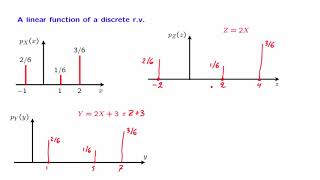
L11.2 The PMF of a Function of a Discrete Random Variable
113
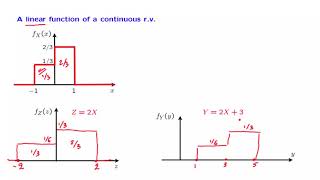
L11.3 A Linear Function of a Continuous Random Variable
114
L11.4 A Linear Function of a Normal Random Variable
115
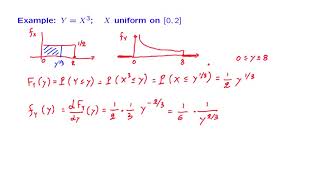
L11.5 The PDF of a General Function
116
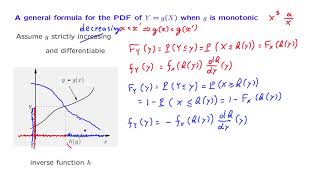
L11.6 The Monotonic Case
117
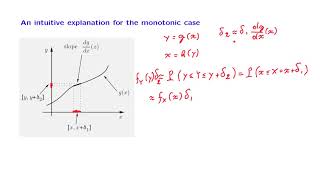
L11.7 The Intuition for the Monotonic Case
118
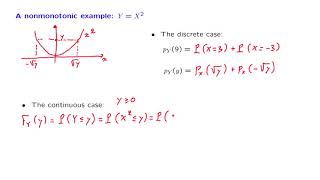
L11.8 A Nonmonotonic Example
119
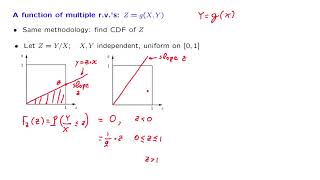
L11.9 The PDF of a Function of Multiple Random Variables
120
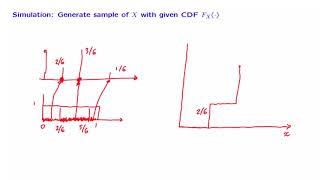
S11.1 Simulation
S11.1 Simulation
121
L12.1 Lecture Overview
122
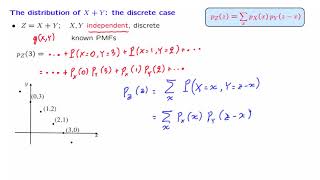
L12.2 The Sum of Independent Discrete Random Variables
123
L12.3 The Sum of Independent Continuous Random Variables
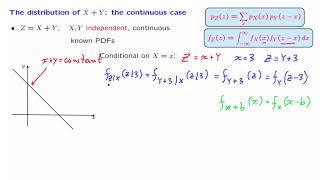
124
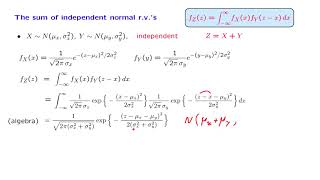
L12.4 The Sum of Independent Normal Random Variables
125
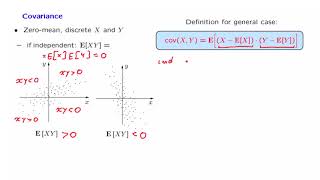
L12.5 Covariance
L12.5 Covariance
126
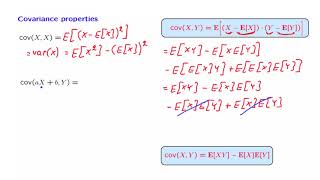
L12.6 Covariance Properties
127
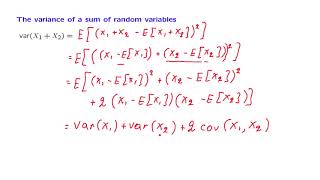
L12.7 The Variance of the Sum of Random Variables
128
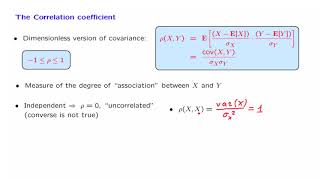
L12.8 The Correlation Coefficient
129
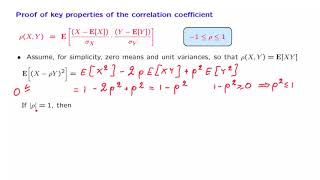
L12.9 Proof of Key Properties of the Correlation Coefficient
130
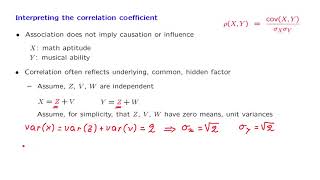
L12.10 Interpreting the Correlation Coefficient
131
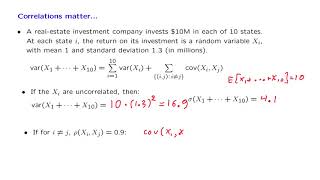
L12.11 Correlations Matter
132
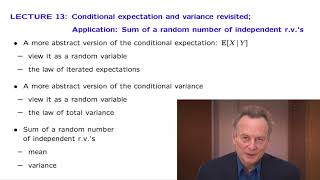
L13.1 Lecture Overview
133
L13.2 Conditional Expectation as a Random Variable
134
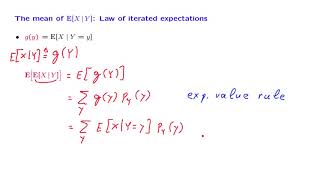
L13.3 The Law of Iterated Expectations
135
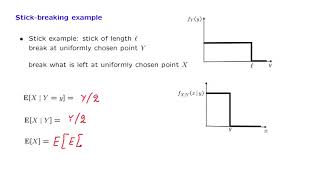
L13.4 Stick-Breaking Revisited
136
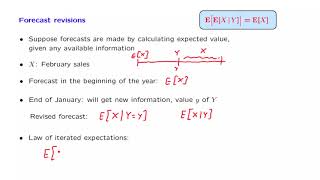
L13.5 Forecast Revisions
137
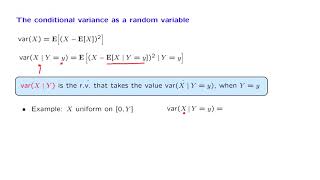
L13.6 The Conditional Variance
138
L13.7 Derivation of the Law of Total Variance
139
L13.8 A Simple Example
140
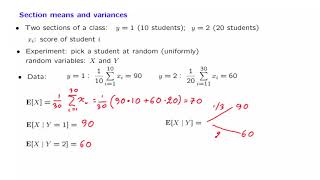
L13.9 Section Means and Variances
141
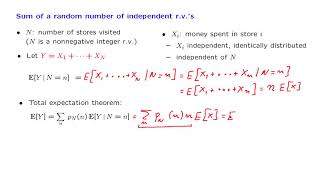
L13.10 Mean of the Sum of a Random Number of Random Variables
142
L13.11 Variance of the Sum of a Random Number of Random Variables
143
S13.1 Conditional Expectation Properties
144
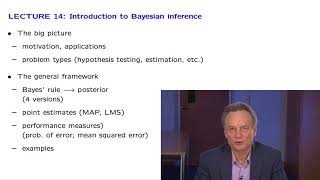
L14.1 Lecture Overview
145
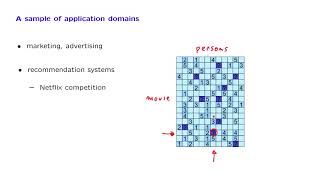
L14.2 Overview of Some Application Domains
146
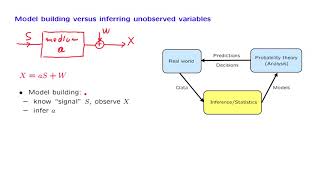
L14.3 Types of Inference Problems
147
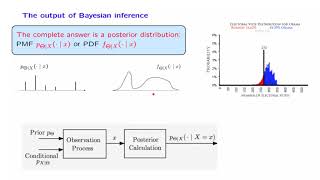
L14.4 The Bayesian Inference Framework
148
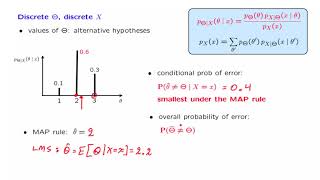
L14.5 Discrete Parameter, Discrete Observation
149
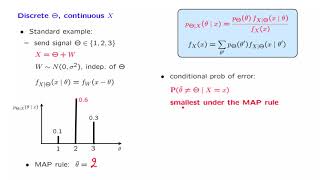
L14.6 Discrete Parameter, Continuous Observation
150
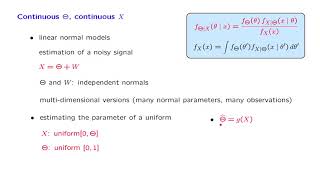
L14.7 Continuous Parameter, Continuous Observation
151
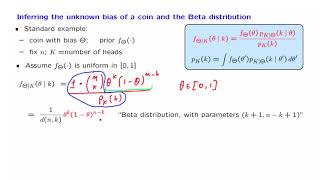
L14.8 Inferring the Unknown Bias of a Coin and the Beta Distribution
152
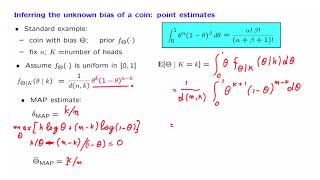
L14.9 Inferring the Unknown Bias of a Coin - Point Estimates
153
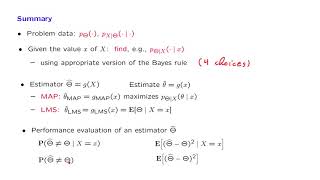
L14.10 Summary
L14.10 Summary
154
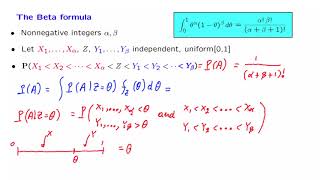
S14.1 The Beta Formula
155
L15.1 Lecture Overview
156
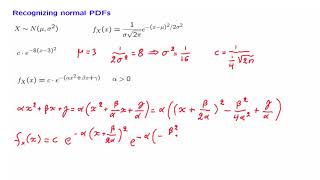
L15.2 Recognizing Normal PDFs
157
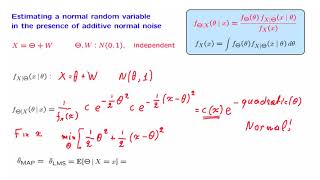
L15.3 Estimating a Normal Random Variable in the Presence of Additive Noise
158
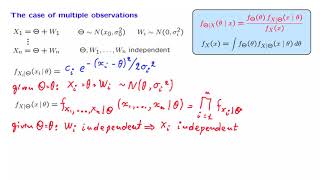
L15.4 The Case of Multiple Observations
159
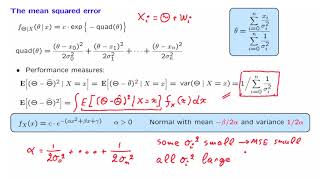
L15.5 The Mean Squared Error
160
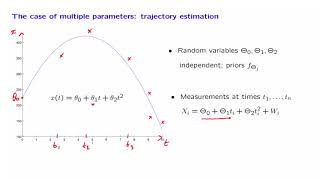
L15.6 Multiple Parameters; Trajectory Estimation
161
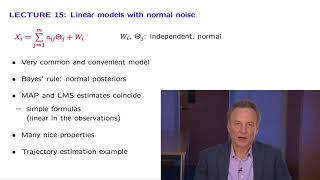
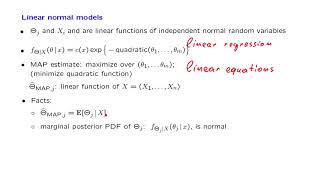
L15.7 Linear Normal Models
162
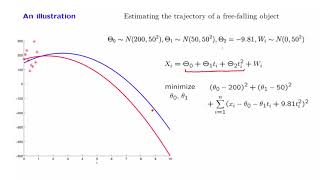
L15.8 Trajectory Estimation Illustration
163
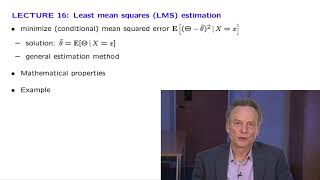
L16.1 Lecture Overview
164
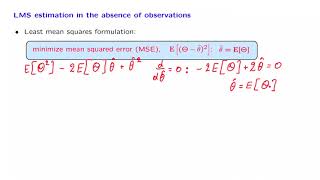
L16.2 LMS Estimation in the Absence of Observations
165
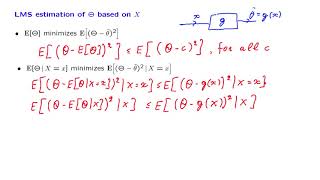
L16.3 LMS Estimation of One Random Variable Based on Another
166
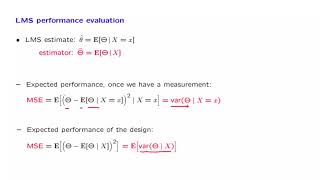
L16.4 LMS Performance Evaluation
167
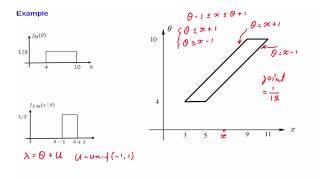
L16.5 Example: The LMS Estimate
168
L16.6 Example Continued: LMS Performance Evaluation
169
L16.7 LMS Estimation with Multiple Observations or Unknowns
170
L16.8 Properties of the LMS Estimation Error
171
L17.1 Lecture Overview
172
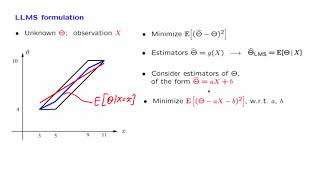
L17.2 LLMS Formulation
173
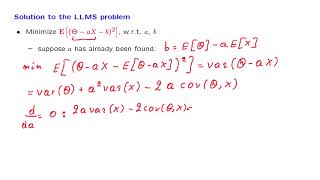
L17.3 Solution to the LLMS Problem
174
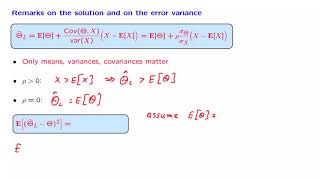
L17.4 Remarks on the LLMS Solution and on the Error Variance
175
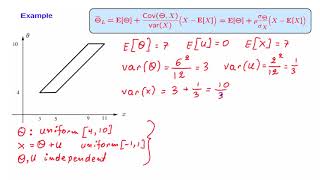
L17.5 LLMS Example
L17.5 LLMS Example
176
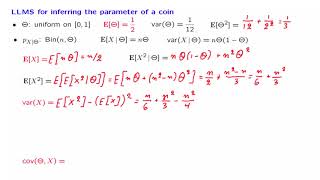
L17.6 LLMS for Inferring the Parameter of a Coin
177
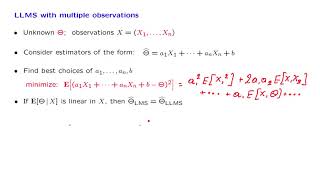
L17.7 LLMS with Multiple Observations
178
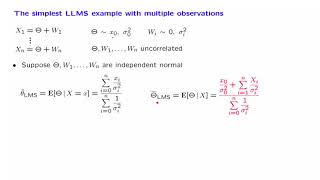
L17.8 The Simplest LLMS Example with Multiple Observations
179
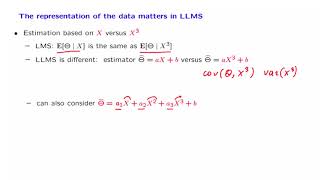
L17.9 The Representation of the Data Matters in LLMS
180
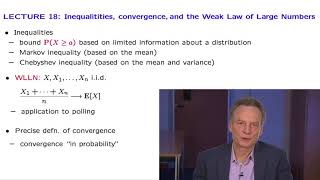
L18.1 Lecture Overview
181
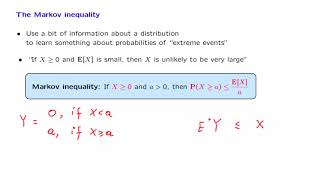
L18.2 The Markov Inequality
182
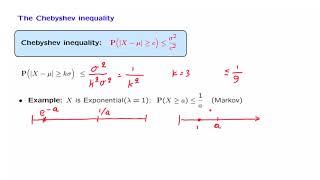
L18.3 The Chebyshev Inequality
183
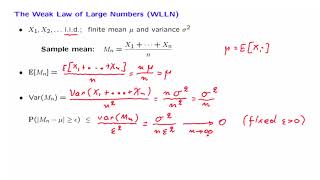
L18.4 The Weak Law of Large Numbers
184
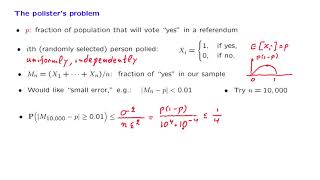
L18.5 Polling
L18.5 Polling
185
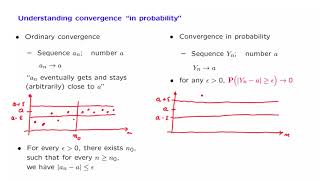
L18.6 Convergence in Probability
186
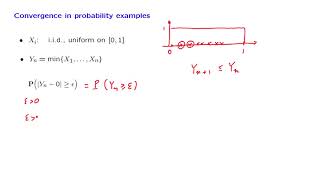
L18.7 Convergence in Probability Examples
187
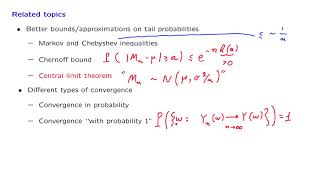
L18.8 Related Topics
188
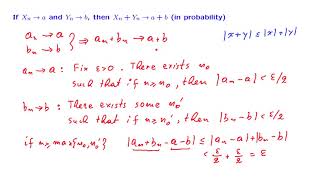
S18.1 Convergence in Probability of the Sum of Two Random Variables
189
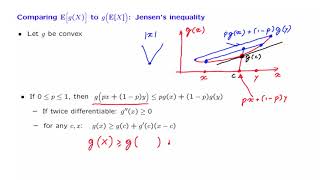
S18.2 Jensen's Inequality
190
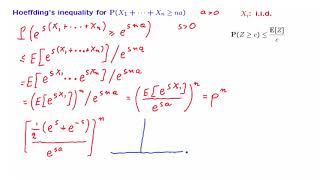
S18.3 Hoeffding's Inequality
191
L19.1 Lecture Overview
192
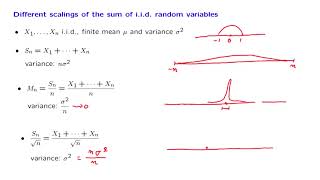
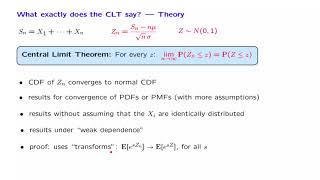
L19.2 The Central Limit Theorem
193
L19.3 Discussion of the CLT
194
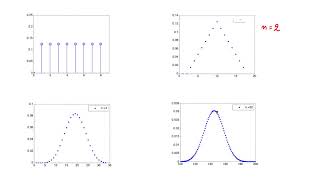
L19.4 Illustration of the CLT
195
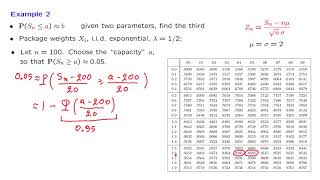
L19.5 CLT Examples
L19.5 CLT Examples
196
L19.6 Normal Approximation to the Binomial
197
L19.7 Polling Revisited
198
L20.1 Lecture Overview
199
L20.2 Overview of the Classical Statistical Framework
200
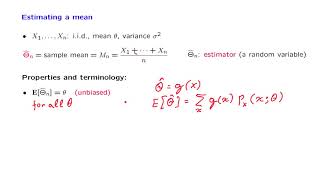
L20.3 The Sample Mean and Some Terminology
201
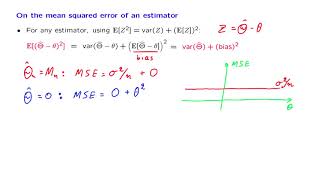
L20.4 On the Mean Squared Error of an Estimator
202
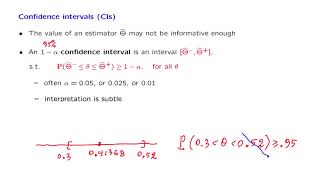
L20.5 Confidence Intervals
203
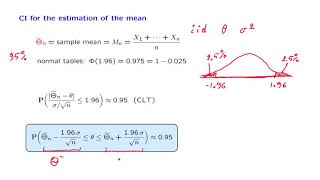
L20.6 Confidence Intervals for the Estimation of the Mean
204
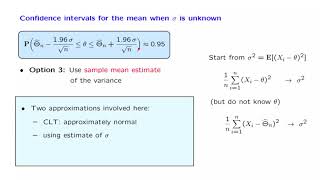
L20.7 Confidence Intervals for the Mean, When the Variance is Unknown
205
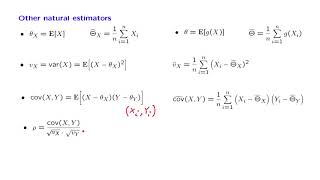
L20.8 Other Natural Estimators
206
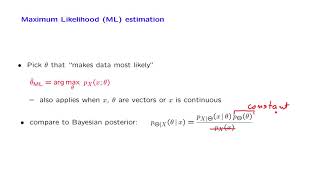
L20.9 Maximum Likelihood Estimation
207
L20.10 Maximum Likelihood Estimation Examples
208
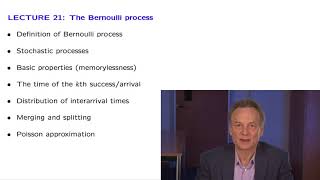
L21.1 Lecture Overview
209
L21.2 The Bernoulli Process
210
L21.3 Stochastic Processes
211
L21.4 Review of Known Properties of the Bernoulli Process
212
L21.5 The Fresh Start Property
213
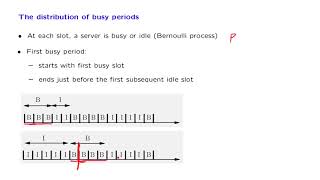
L21.6 Example: The Distribution of a Busy Period
214
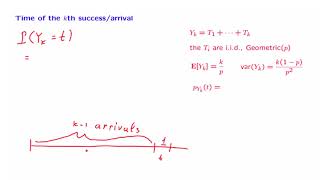
L21.7 The Time of the K-th Arrival
215
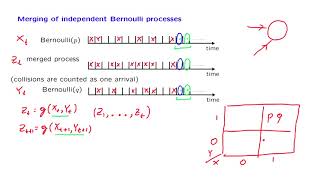
L21.8 Merging of Bernoulli Processes
216
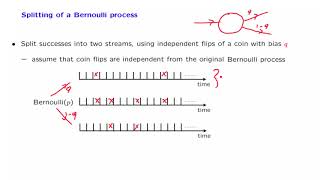
L21.9 Splitting a Bernoulli Process
217
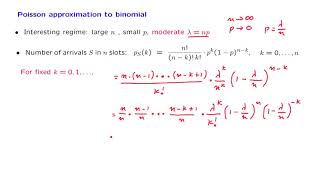
L21.10 The Poisson Approximation to the Binomial
218
L22.1 Lecture Overview
219
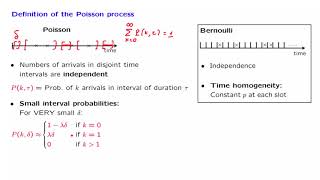
L22.2 Definition of the Poisson Process
220
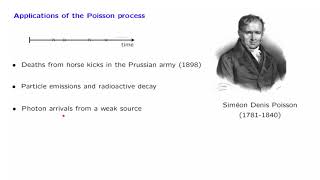
L22.3 Applications of the Poisson Process
221
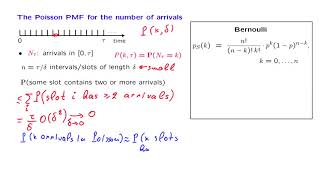
L22.4 The Poisson PMF for the Number of Arrivals
222
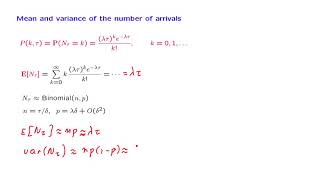
L22.5 The Mean and Variance of the Number of Arrivals
223
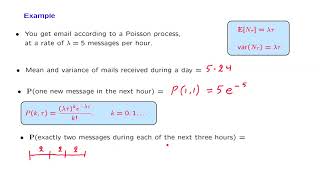
L22.6 A Simple Example
224
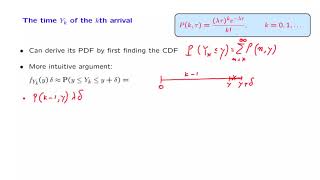
L22.7 Time of the K-th Arrival
225
L22.8 The Fresh Start Property and Its Implications
226
L22.9 Summary of Results
227
L22.10 An Example
L22.10 An Example
228
L23.1 Lecture Overview
229
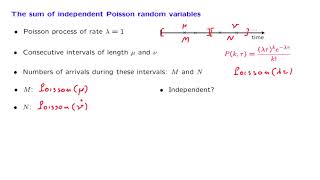
L23.2 The Sum of Independent Poisson Random Variables
230
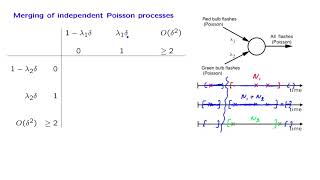
L23.3 Merging Independent Poisson Processes
231
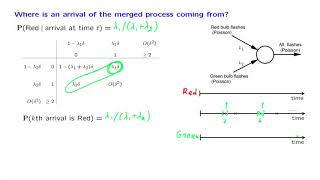
L23.4 Where is an Arrival of the Merged Process Coming From?
232
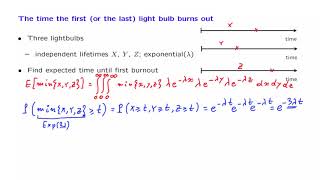
L23.5 The Time Until the First (or last) Lightbulb Burns Out
233
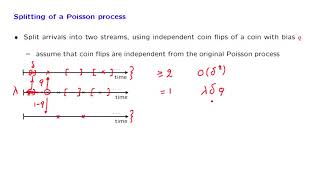
L23.6 Splitting a Poisson Process
234
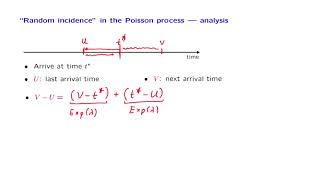
L23.7 Random Incidence in the Poisson Process
235
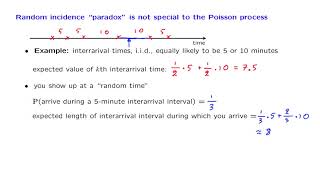
L23.8 Random Incidence in a Non-Poisson Process
236
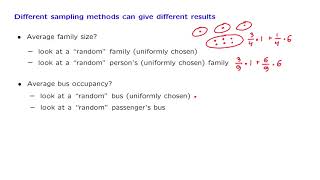
L23.9 Different Sampling Methods can Give Different Results
237
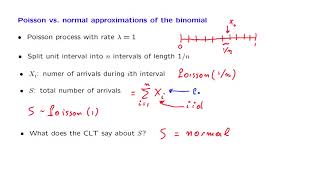
S23.1 Poisson Versus Normal Approximations to the Binomial
238
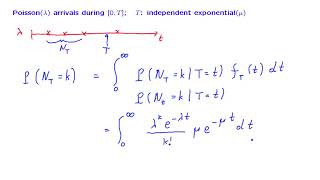
S23.2 Poisson Arrivals During an Exponential Interval
239
L24.1 Lecture Overview
240
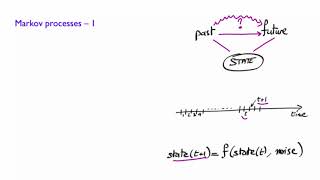
L24.2 Introduction to Markov Processes
241
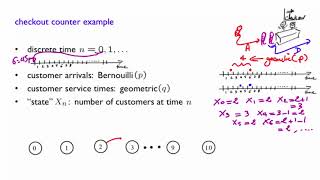
L24.3 Checkout Counter Example
242
L24.4 Discrete-Time Finite-State Markov Chains
243
L24.5 N-Step Transition Probabilities
244
L24.6 A Numerical Example - Part I
245
L24.7 Generic Convergence Questions
246
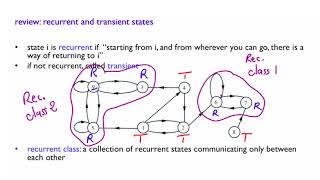
L24.8 Recurrent and Transient States
247
L25.1 Brief Introduction (RES.6-012 Introduction to Probability)
248
L25.2 Lecture Overview
249
L25.3 Markov Chain Review
250
L25.4 The Probability of a Path
251
L25.5 Recurrent and Transient States: Review
252
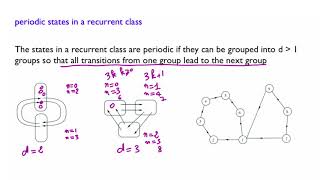
L25.6 Periodic States
253
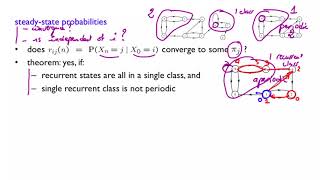
L25.7 Steady-State Probabilities and Convergence
254
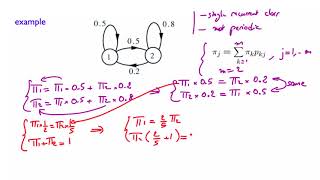
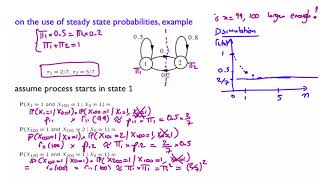
L25.8 A Numerical Example - Part II
255
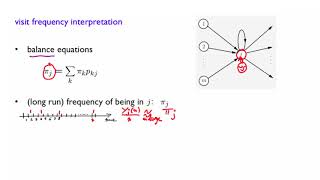
L25.9 Visit Frequency Interpretation of Steady-State Probabilities
256
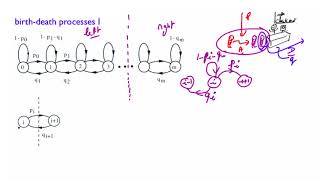
L25.10 Birth-Death Processes - Part I
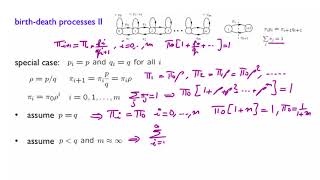
257
L25.11 Birth-Death Processes - Part II
258
L26.1 Brief Introduction (RES.6-012 Introduction to Probability)
259
L26.2 Lecture Overview
260
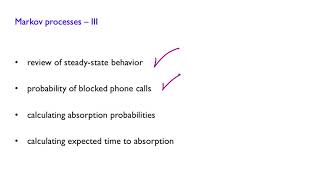
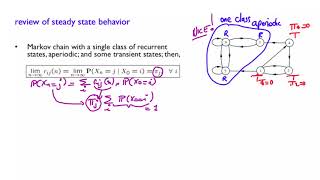
L26.3 Review of Steady-State Behavior
261
L26.4 A Numerical Example - Part III
262
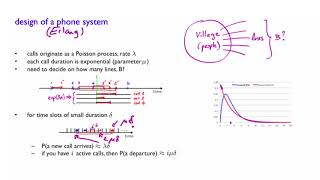
L26.5 Design of a Phone System
263
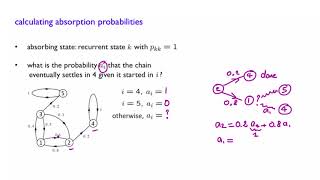
L26.6 Absorption Probabilities
264
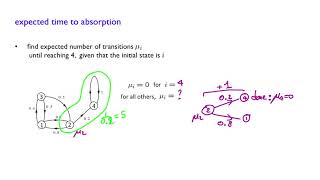
L26.7 Expected Time to Absorption
265
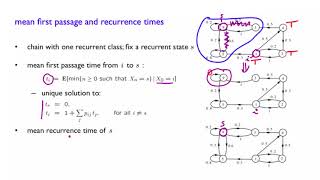
L26.8 Mean First Passage Time
266
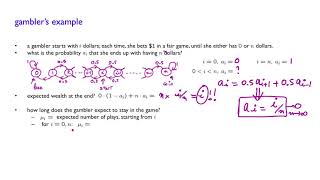
L26.9 Gambler's Ruin